
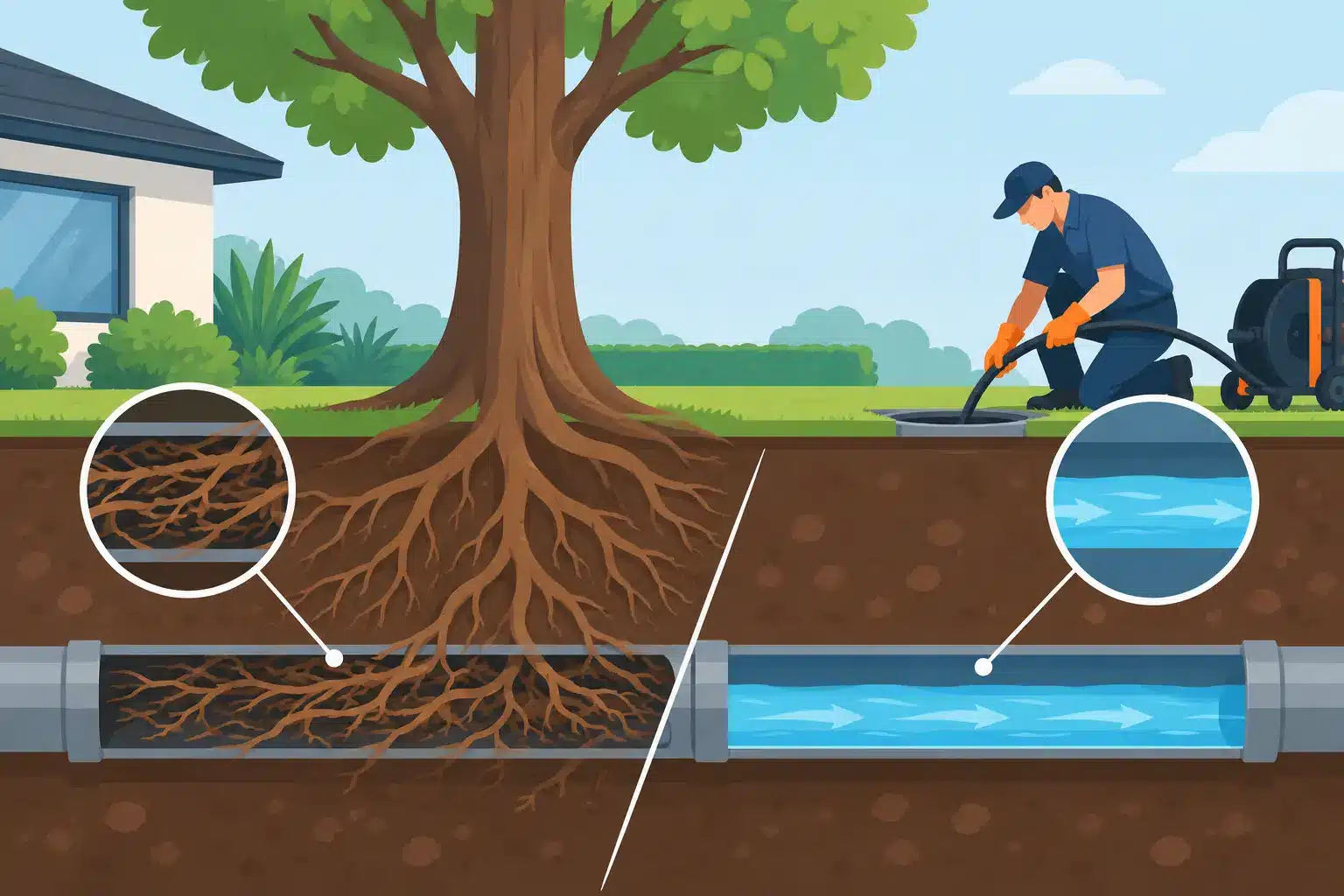
A drain that blocks, clears, then blocks again a few weeks later is rarely just a simple buildup issue. In many Perth properties, it is a sign that roots have found their way into the pipe. Professional tree root drain removal Perth services deal with the immediate blockage, but more importantly, they identify why roots were able to enter the drain in the first place.
Roots naturally follow moisture. Even a small gap at a pipe joint, crack, or damaged section can release enough water vapor to attract them. Once fine roots get inside, they grow into a dense mass that catches toilet paper, grease, wipes, and other debris. The result is slow drainage at first, followed by recurring overflows, unpleasant odors, and potentially expensive pipe damage.
Signs Tree Roots May Be Blocking Your Drain
A blocked drain does not always mean tree roots are the cause, but repeat blockages deserve proper investigation. If more than one fixture is draining slowly, such as toilets, showers, and sinks, the problem may be further down the main sewer line rather than in a single internal pipe.
Gurgling sounds after flushing, water backing up through a floor drain, sewage odors outdoors, or damp patches near the line are also warning signs. You may notice the issue gets worse after heavy use of the bathroom or laundry because the restricted pipe cannot carry the additional flow away.
Older Perth homes can be particularly vulnerable where original clay pipes, concrete pipes, or aging jointed pipework remain in place. Mature trees are not automatically the problem. A healthy, well-installed drain should keep roots out. Root intrusion usually points to a weakness in the pipe that needs attention, not simply a tree that needs to be removed.
Tree Root Drain Removal Perth: How the Problem Is Diagnosed
The right repair starts with knowing what is happening below ground. Guesswork can lead to repeated callouts, unnecessary excavation, and a drain that still fails when it matters most.
A licensed plumber can use a drain camera inspection to view the inside of the pipe. The camera shows where the roots are located, how severe the intrusion is, and whether the pipe has cracks, displaced joints, corrosion, or a collapsed section. It can also help confirm the depth and direction of the drain before any repair work is planned.
This inspection matters because roots can look like the entire problem when they are actually a symptom of structural damage. If the pipe is intact apart from a minor joint gap, clearing and sealing the affected area may be appropriate. If the camera reveals widespread fractures or a sagging line that holds waste, a more durable repair may be the better long-term choice.
Clearing Roots Without Damaging the Drain
Root removal is not a job for chemicals or improvised tools. Store-bought drain products may not reach the obstruction, and harsh chemicals can create safety risks without repairing the point where roots entered. They can also leave a dangerous substance in a pipe for the next person who works on it.
Professional clearing methods depend on the pipe material, the size of the roots, and the condition of the drain. High-pressure water jetting can cut through roots and flush loosened debris from the line. Mechanical cutting equipment may be used for more established root masses. The goal is to restore full flow while avoiding unnecessary damage to an already weakened pipe.
After clearing, another camera inspection is often worthwhile. It confirms the drain is flowing freely and gives a clearer view of the pipe walls now that the roots and debris have been removed. This is when a plumber can recommend whether the line can be monitored, needs a localized repair, or should be relined or replaced.
A fast clearance is essential when sewage is backing up, but clearing alone is not always a complete solution. If the opening remains, roots will usually return. How quickly that happens depends on the tree species, soil conditions, moisture levels, and the size of the defect in the pipe.
When Drain Repair Is the Better Long-Term Answer
There is a trade-off between the least disruptive repair today and the repair most likely to prevent another failure. For a small, isolated issue, targeted excavation and replacement of the damaged section may be practical. Where access is difficult or damage runs along a longer section, pipe relining can sometimes create a new internal pipe without major digging.
Severely broken, crushed, or misaligned drains may require excavation and replacement. While this is more involved, it can be the most reliable option when the pipe has reached the end of its service life. A quality repair should restore correct drainage fall, use suitable materials, and properly connect the new work to the existing system.
For homeowners, the decision often comes down to the age and condition of the drain, not just the current blockage. For landlords, strata managers, and commercial property owners, the calculation also includes disruption to tenants, customers, parking areas, and day-to-day operations. A clear camera report and practical explanation of the options make it easier to authorize work with confidence.
Why Repeat Blockages Should Not Be Ignored
A slow drain can become an urgent sanitation issue with little warning. When roots restrict a sewer pipe, wastewater has fewer places to go. It may rise through the lowest fixture in the building, such as a shower, laundry floor drain, or ground-level toilet.
Repeated backups can damage flooring, walls, stock, and common areas. They can also create hygiene concerns that are especially serious in rental properties, food businesses, offices, and strata complexes. Acting when the first repeat blockage appears is usually less disruptive than waiting for a complete overflow.
It is also worth avoiding the temptation to keep using quick drain treatments between callouts. They may make the drain appear better for a short period, but they do not remove established roots or repair cracked pipework. A proper diagnosis gives you a plan based on the actual condition of the line.
A Practical Approach for Perth Properties
Perth gardens often include mature trees and established landscaping close to homes, driveways, and boundary lines. That does not mean those trees need to be removed. In many cases, repairing the drain is the sensible first step because it addresses the source of the moisture attracting the roots.
If a drain runs close to large trees, regular camera inspections may be a sensible maintenance measure after repairs are completed. The appropriate schedule depends on the pipe condition and history of blockages. A property with a newly relined drain may need less attention than an older line that is still awaiting replacement.
Everyday Plumbers provides licensed, insured local tradespeople who can assess blocked drains, locate root intrusion, and recommend a repair that suits the condition of the pipe and the property. For urgent overflows, same-day response can help limit damage and restore safe use of your plumbing.
What to Do When You Suspect Root Intrusion
If wastewater is backing up, stop using taps, toilets, washing machines, and dishwashers where possible. Continued water use can worsen the overflow. Keep people and pets away from contaminated areas, and arrange professional help promptly.
If the drain is only slow at this stage, it is still worth booking an inspection before the issue turns into an emergency. The best outcome is not simply a drain that works again this afternoon. It is a drain that has been properly assessed, cleared with the right equipment, and repaired where needed so you can rely on it tomorrow.




Leave A Comment