
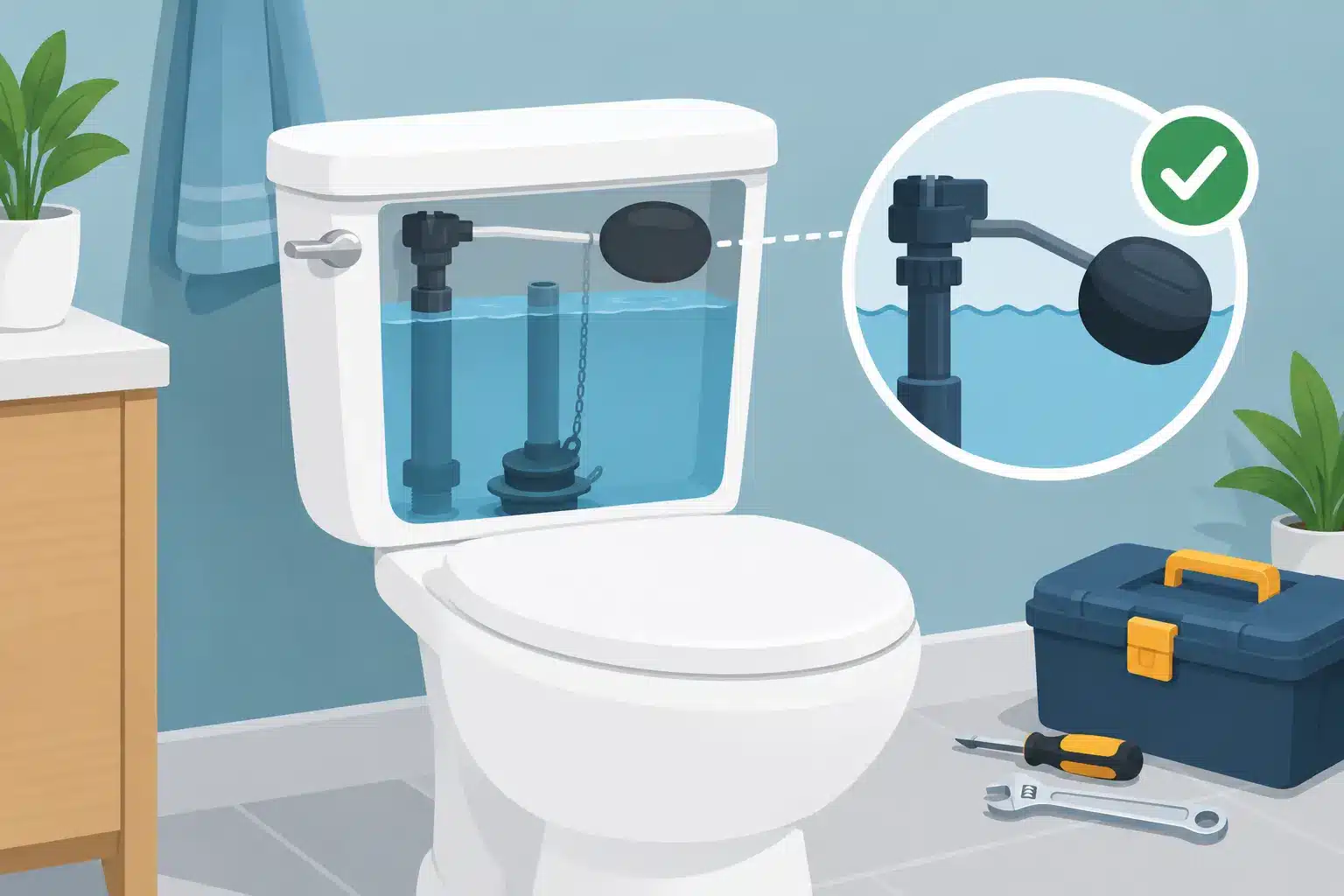
Water running into a toilet bowl may look minor at first, but a cistern that will not stop filling can waste a surprising amount of water and become an overflow risk. To stop toilet cistern overflow safely, the priority is to isolate the water supply, prevent damage around the toilet, and have the failed component diagnosed rather than repeatedly adjusted.
A toilet cistern is often called a toilet tank in the US. In Perth homes, apartments, commercial bathrooms, and strata properties, the same basic problem applies: the filling mechanism is not shutting off when it should. That may be a simple worn part, but it can also point to incorrect installation, water-pressure issues, or a concealed fault that needs a licensed plumber’s attention.
What to Do When a Toilet Cistern Starts Overflowing
If water is rising toward the top of the cistern or spilling onto the floor, act quickly but do not force any fittings. Turn off the small isolation valve on the water line leading to the toilet, usually located on the wall or floor behind the fixture. Turn it clockwise until the water stops. If the valve is seized, leaking, or cannot be reached safely, turn off the property’s main water supply instead.
Remove the cistern lid carefully and place it somewhere stable. Many lids are ceramic and can crack easily. If the water level is still rising, lifting the float gently may temporarily stop the incoming water, but this is only a short-term measure while the supply is isolated.
Keep towels around the toilet base and move mats, paper products, and electrical items away from the area. If wastewater has reached the floor, treat the area as contaminated and avoid using the toilet until it has been inspected and cleaned properly.
Do not keep flushing to test whether the problem has resolved. Each flush can introduce more water and make an active overflow worse.
Why Toilet Cisterns Overflow
A working cistern fills after flushing, then the fill valve closes once the float reaches the correct level. When that shutoff action fails, water continues to enter the tank. The overflow tube is designed to direct excess water into the bowl before it spills over the cistern edge, but it is a warning sign, not a repair.
A faulty fill valve or inlet valve
The fill valve is the most common cause of a continuously filling cistern. Internal seals can wear out, sediment can interfere with the mechanism, and older valves may stick open. You may hear a constant hissing sound or see water flowing into the overflow tube long after the toilet was flushed.
Replacing a valve without checking its setup can create another problem. The new component must suit the cistern, be adjusted to the correct water level, and be connected without damaging the supply line or fittings.
A damaged or misadjusted float
The float tells the fill valve when to stop. If it is cracked, waterlogged, bent, or set too high, the cistern can overfill. Modern systems often use a compact float cup rather than the older ball-style float, but both can fail or lose adjustment over time.
A float that has been adjusted repeatedly may mask the real issue. The valve may still be worn, or the cistern may have a part that is no longer compatible with the rest of the mechanism.
Debris in the water supply
Sediment, scale, or small particles can prevent an inlet valve from sealing fully. This is particularly common after plumbing work, a water interruption, or in older properties with aging pipework. The toilet may appear to work normally for a short period, then begin running again later.
A plumber can check the valve, supply connection, and water flow without turning a small repair into a leak behind the toilet.
Incorrect water level or unsuitable replacement parts
The water level should sit below the top of the overflow tube. If it is too high, even a minor valve delay can send water down the overflow. In some cases, a previous repair has used a low-quality universal part, an incorrectly sized washer, or a mechanism that does not fit the cistern properly.
This is why a lasting repair involves more than stopping the noise. The internal parts, cistern condition, supply valve, and flush operation all need to work together.
Overflow Into the Bowl vs. Water on the Floor
Water running into the toilet bowl through the overflow tube is usually a cistern filling fault. It wastes water, may increase utility bills, and can develop into a more serious failure, but it does not always mean the toilet is blocked.
Water overflowing from the bowl onto the floor is different. That can indicate a blockage in the toilet trap or drain line, and flushing again can spread contaminated water through the bathroom. Shut off the water supply, avoid using nearby fixtures if drains are backing up, and arrange urgent plumbing help.
Water around the base of the toilet may also come from a leaking supply hose, failed isolation valve, cracked cistern, loose connection, or failed pan seal. The source is not always obvious because water can travel along the outside of the fixture before appearing on the floor.
When to Call a Plumber to Stop Toilet Cistern Overflow
A homeowner or property manager can safely isolate the water, but the repair should not be delayed if the cistern keeps running, has overflowed, or is leaking externally. A qualified plumber can identify whether the fault is limited to an internal valve or whether there is a wider issue with the fixture or water supply.
Prompt professional service is especially worthwhile when:
- the isolation valve does not fully stop the water
- the cistern is cracked, unstable, or leaking from its connections
- water has reached flooring, cabinetry, or an apartment below
- the toilet is in a rental, strata, office, retail, or public-use property
- the toilet continues to run after parts have already been adjusted or replaced
For landlords and strata managers, a running cistern is not simply an inconvenience. It can create avoidable water costs, tenant disruption, and damage risks if a concealed leak becomes worse between inspections. Commercial bathrooms have the added issue of customer access and hygiene, so a reliable repair matters more than a quick patch.
What a Proper Repair Should Include
A professional toilet repair starts by confirming where the water is entering and where it is escaping. The plumber will inspect the fill valve, float, flush valve, overflow tube, supply hose, isolation valve, cistern mounting, and toilet operation. If needed, they can replace worn components, reset the water level, and test multiple flush cycles before leaving.
The condition of the surrounding area matters too. If the floor is wet, the source needs to be confirmed rather than assumed. A cistern fault may exist alongside a worn pan seal or leaking connector, particularly in older bathrooms.
Everyday Plumbers approaches toilet leaks and cistern faults as repairs that should be done right the first time. That means using suitable parts, checking the whole fixture, and avoiding temporary fixes that leave a property owner with the same problem a few weeks later.
Avoid Repeat Cistern Problems
Toilets usually give warning signs before they fail completely. A random refill sound, intermittent hissing, water trickling into the bowl, a loose flush button, or dampness behind the toilet all deserve attention. Addressing these early is generally simpler than dealing with an overnight overflow or a flooded bathroom.
Avoid using chemical drain products or household adhesives inside the cistern. They will not fix a failing fill valve and can damage seals or make later repairs more difficult. Likewise, do not overtighten plastic fittings in an attempt to stop a leak. Plastic threads and ceramic cisterns can crack under excess force.
A quiet toilet is not always a healthy toilet, but a toilet that constantly refills is clearly asking for attention. Isolate the water, protect the area, and arrange a proper inspection before a small cistern fault becomes water damage, wasted water, and a far more disruptive repair.





Leave A Comment