
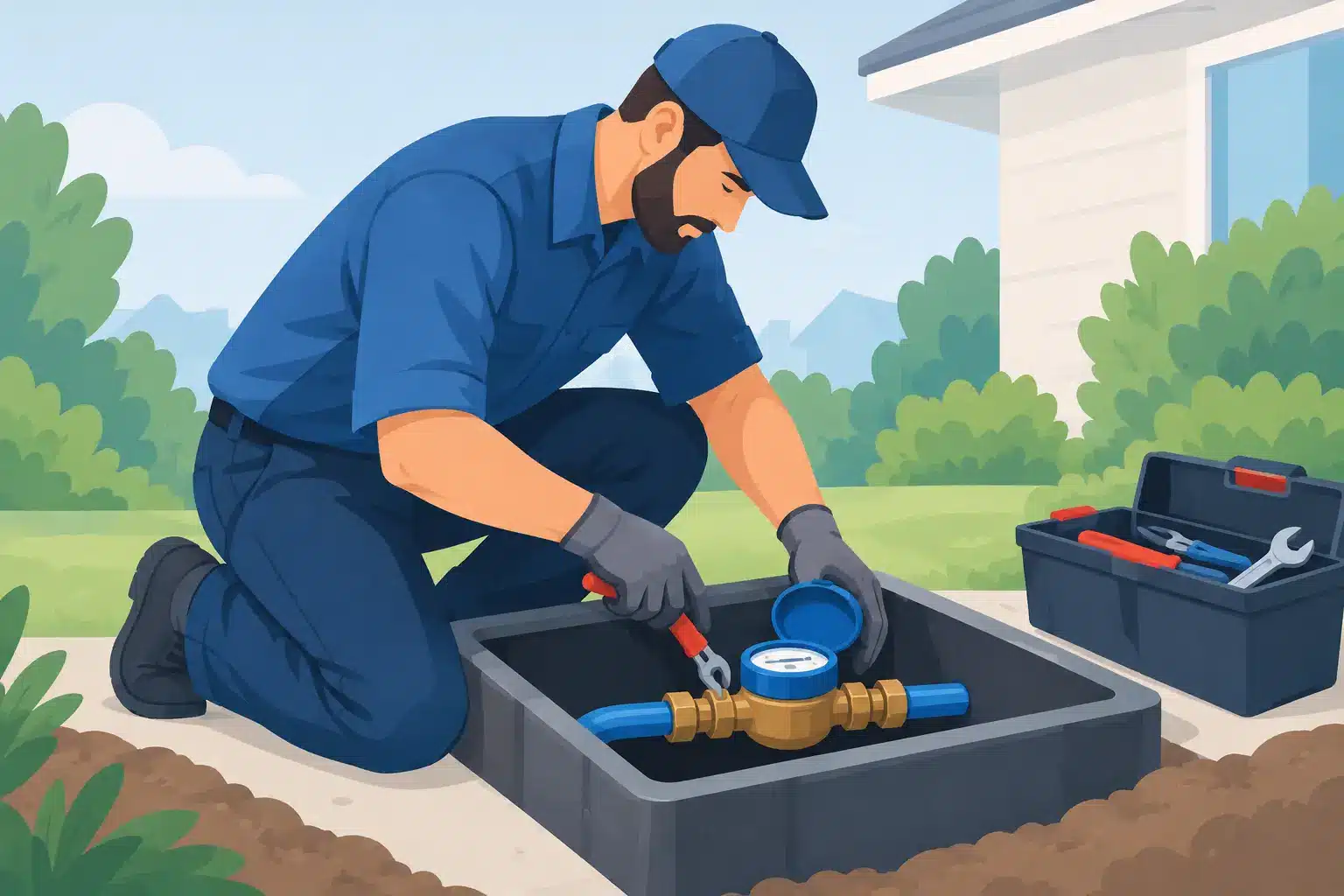
A wet patch around the meter box can look minor, but water can travel underground, soften soil, raise a water bill, and damage driveways or nearby foundations. The answer to who repairs water meter leaks depends on exactly where the leak sits: the meter and utility-owned connection may be the water utility’s job, while pipework serving your property is usually a licensed plumber’s responsibility.
The boundary is not always obvious from above ground. That is why a prompt inspection matters. A qualified plumber can locate the source, explain what belongs to you, and carry out a durable repair where private plumbing is at fault.
Who repairs water meter leaks on your property?
In many areas, the water utility is responsible for the water meter itself and the supply infrastructure on its side of the connection. If water is leaking from the meter body, a utility-owned valve, or the public supply line before the service connection, report it to the utility as soon as possible.
A homeowner, landlord, or building owner is commonly responsible for the private service line after the meter. This is the underground pipe that carries water from the meter to the house, unit, business, or irrigation system. Leaks in this section require a licensed plumber.
The exact division of responsibility differs between utilities, cities, and property types. A meter box may contain both utility equipment and privately owned pipework. Rather than assuming, take a clear photo if it is safe to do so, check your utility’s guidance, and arrange a professional assessment if the source is unclear.
A simple way to understand the boundary
Think of the meter as the handover point between the public water network and your property. The utility generally maintains the meter and its network equipment. The property owner generally maintains the pipes that distribute metered water into the building.
There are exceptions. Some properties have unusual service layouts, shared meters, backflow devices, irrigation branches, or older connections that make the boundary less straightforward. Commercial sites and strata buildings can have several meters and private mains, so the repair responsibility may sit with the owner, owners association, or managing agent.
Signs the leak is on the private side
You do not need to excavate or dismantle the meter box to identify a problem. In fact, doing so can create more damage or interfere with utility equipment. Instead, look for practical warning signs.
If the water meter continues to register use when all faucets, toilets, appliances, and irrigation are off, there may be a leak somewhere after the meter. A spinning leak indicator or moving digital display is a useful clue. Water pooling in the box, persistently damp soil near the meter, a hissing sound, reduced water pressure, or an unexplained increase in water charges can also point to a service-line leak.
A leak directly at a visible fitting on the property side may be easier to identify, but a hidden underground leak needs proper testing. Water may emerge several feet away from the actual break. The wettest spot is not always where the pipe has failed.
What to do when you find water around the meter
Treat a suspected meter leak as a priority, particularly if water is flowing, ground is sinking, or the meter box is close to electrical equipment, a driveway, or a building.
First, keep children and pets away from the area and do not reach into a flooded meter box. Do not force valves, cut pipe, or attempt to remove the meter. Utility-owned equipment can only be handled by authorized personnel, and damaged valves can turn a manageable leak into an urgent outage.
Next, check whether the water is actively flowing and whether your meter is still moving with all water use inside turned off. If the leak appears to be at the meter, before it, or on a utility valve, contact the water utility. If it appears to be after the meter, or you cannot tell where it begins, call a licensed plumbing professional.
For a significant private-side leak, a plumber may be able to isolate water at the property shutoff valve while diagnosing the line. If you know the location of your home’s internal main shutoff and it is safe and accessible, turning it off can limit water loss. This may not stop a leak between the meter and the building, but it can reduce pressure and prevent further internal water use.
Why a licensed plumber is the right call for private leaks
Service-line repairs are not simply a matter of replacing a visible connector. The plumber needs to confirm the leak location, check pipe condition, identify the material used, and choose a repair method that will hold up underground.
Older properties may have corroded metal lines, brittle fittings, poor previous repairs, or pipes affected by tree roots and soil movement. Replacing one failed section can be the right solution when the rest of the line is sound. If testing shows widespread deterioration, a partial patch may only delay the next failure. A good plumber will explain that trade-off before work begins.
Professional leak detection also avoids unnecessary excavation. Depending on the site, the plumber may use pressure testing, meter testing, acoustic methods, or other diagnostic equipment to narrow down the source. This is especially valuable beneath concrete, landscaped areas, parking lots, or busy commercial entrances where digging in the wrong place adds cost and disruption.
Everyday Plumbers approaches these repairs with the goal of fixing the cause, not applying a short-term band-aid. For homeowners, landlords, and property managers, that means clear advice on the fault, the repair scope, and whether the pipework shows signs of future risk.
Water meter leaks at rentals, businesses, and strata properties
Rental and managed properties need fast communication as well as a proper repair. Tenants should report pooling water, low pressure, or suspected leaks promptly rather than trying to access the meter themselves. The landlord or property manager can then arrange a plumber for private pipework and notify the utility where its equipment may be involved.
For a commercial property, water loss can affect restrooms, kitchens, fire services, production areas, and customer access. A leaking private main may require isolation planning so the repair causes the least possible interruption to operations. The same applies to strata complexes, where one meter or private main can serve multiple units or common areas.
In these situations, it helps to document the meter reading, visible water, and time the issue was noticed. That information supports the diagnosis and gives managers a clear record for maintenance decisions. It does not replace a site inspection, but it can speed up the response.
Can the water bill be adjusted after a leak?
Some water utilities offer a leak allowance, adjustment, or review process when a concealed leak causes unusually high usage. Rules vary widely, and an adjustment is never guaranteed. You may need to provide a plumber’s invoice, proof of repair, a repair date, and meter readings.
Keep the paperwork once the work is complete. Ask the plumber for a clear description of the fault and the repair carried out. This is useful for utility applications, insurance discussions, landlord records, and future property maintenance.
Do not wait for the next bill if you suspect a leak. The longer water runs underground, the more it can cost and the greater the chance of soil erosion or property damage. A quick call to the utility or a licensed plumber can establish responsibility and get the right repair underway before a small leak becomes a larger problem.






Leave A Comment