
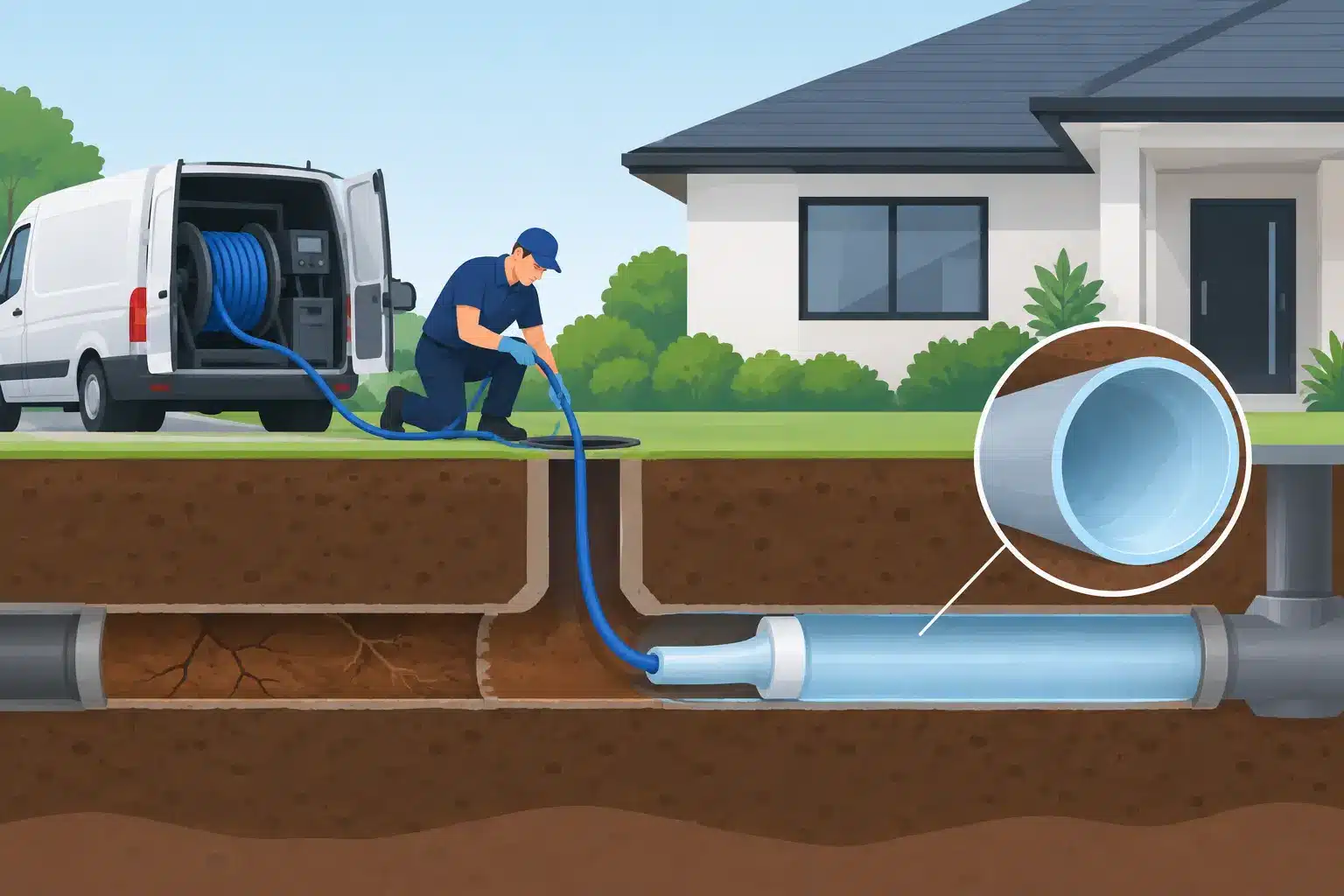
A cracked drain line does not always mean your driveway, garden, or business entrance needs to be dug up. Drain relining services Perth property owners use can repair many damaged underground pipes from the inside, restoring flow and helping prevent repeat blockages without the disruption of full excavation.
For homeowners, landlords, strata managers, and business owners, the benefit is straightforward: a properly assessed relining repair can deal with the damaged section while keeping disruption to landscaping, paving, tenants, customers, and daily operations to a minimum. The key is accurate diagnosis. Relining is a strong long-term option in the right circumstances, but it is not a one-size-fits-all answer to every blocked or broken drain.
What Drain Relining Actually Does
Drain relining creates a new pipe within an existing damaged pipe. After the drain is inspected and cleaned, a resin-saturated liner is positioned inside the affected section. The liner is then expanded and cured, forming a smooth, durable new internal wall that seals cracks, small gaps, and joints where tree roots or groundwater may be entering.
This approach is often called trenchless drain repair because access is usually gained through an existing drain opening, inspection point, or carefully selected access location. Rather than excavating the whole length of pipe, the plumber focuses on the condition of the drain internally.
A relined pipe has a slightly smaller internal diameter than the original pipe, but this is rarely a practical issue when the pipe has been correctly cleaned, assessed, and sized for the property. The smooth new lining can also improve flow through older pipes that have rough internal surfaces or minor joint defects.
When Drain Relining Services in Perth Make Sense
Relining is particularly useful when a drain runs beneath a concrete slab, driveway, tiled area, established garden, retaining wall, or commercial floor. Digging through these areas can add considerable time, cost, and restoration work to a repair. A relining solution may avoid much of that damage.
It can be a suitable repair for pipes affected by root intrusion, cracked earthenware pipes, leaking joints, localized corrosion, or small holes. It is also useful where a drain has recurring blockages and a camera inspection shows the same underlying defect each time.
For strata and commercial properties, reducing disruption matters just as much as repairing the pipe. A failed drain beneath a common driveway, busy kitchen, tenancy, or car park can quickly affect residents, staff, and customers. A planned relining repair may allow the work to be completed with less excavation and a clearer path back to normal operations.
That said, relining depends on the pipe being structurally suitable. If a pipe has collapsed, has severe misalignment, has lost a large section, or has an incorrect fall, excavation and replacement may be the better long-term repair. A reliable plumber should explain that honestly rather than forcing a relining solution where it will not perform properly.
The Inspection Comes Before the Repair
Recurring drain problems should never be treated as just another blockage. Clearing the water may provide immediate relief, but it does not explain why the drain keeps backing up. The cause could be roots, grease buildup, damaged joints, a cracked pipe, or a section that has moved underground.
A CCTV drain camera inspection gives a clear view inside the line. It helps identify the location and extent of damage, confirms whether the pipe can be cleaned effectively, and shows whether relining is practical. It also helps avoid unnecessary excavation based on guesswork.
Before lining begins, the pipe normally needs thorough cleaning. High-pressure water jetting can remove roots, scale, sediment, and other buildup that would interfere with the repair. If roots have entered through failed joints, simply cutting them out without repairing the entry point often leads to the same problem returning. Relining is designed to seal that weak point rather than repeatedly treating the symptom.
What the Relining Process Usually Involves
The exact method depends on the pipe material, access points, length of the damaged section, and the type of defect found during inspection. In most cases, the work follows a practical sequence.
First, the drain is camera inspected and cleaned. The plumber then measures the affected section and prepares a liner to suit the pipe diameter and repair length. The liner is installed through the existing pipe and positioned precisely over the damaged area.
Once in place, the liner is expanded against the pipe wall and allowed to cure. After curing, a final camera inspection confirms that the repair has formed correctly and that the drain is flowing freely. If the drain has branch connections, these may need to be reopened using specialist cutting equipment.
A professional repair should not end with the liner being installed. The final inspection is the quality check that confirms the work has addressed the actual fault. It gives property owners, managers, and maintenance teams confidence that the drain has been repaired, not merely cleared for the day.
Relining Versus Excavation: The Real Trade-Offs
Drain relining can reduce restoration costs because there may be less concrete cutting, landscaping removal, paving replacement, and disruption to a building. It can also be faster than a major excavation where access is difficult. Those benefits make it an attractive option for many Perth properties.
However, the lowest upfront quote is not always the lowest long-term cost. If a pipe is badly crushed or installed with a major slope problem, relining may not correct the underlying issue. In those situations, excavation and replacement can be the more dependable repair, even though it involves more visible work.
The right choice comes down to the condition of the pipe, not a preferred sales approach. A proper diagnosis should set out what the camera inspection found, whether the line can be relined, what areas will need access, and what outcome you can reasonably expect from the repair.
Signs Your Property May Need a Drain Assessment
A single blocked sink can be caused by local buildup near the fixture. But when multiple fixtures drain slowly, a toilet gurgles, wastewater backs up outside, or blockages keep returning after clearing, the problem may be further down the line.
Other warning signs include wet patches with no obvious cause, unpleasant drain odors, unusually green areas in the lawn, and tree roots repeatedly found in the drain. These signs do not automatically mean relining is required, but they do justify a professional inspection before more damage develops.
For rental, strata, and commercial properties, early assessment is especially valuable. A hidden drain fault can become an urgent sanitation issue with little warning. Addressing recurring symptoms before a complete backup helps protect tenants, customers, and the condition of the property.
Choose a Repair That Is Done Right the First Time
Underground drain repairs are not the place for temporary band-aid fixes. The work should begin with the right equipment, a clear diagnosis, and a recommendation based on what the pipe actually needs. Licensed and insured plumbers should be able to explain the repair in plain language, including when relining is suitable and when replacement is the wiser option.
Everyday Plumbers provides practical drain assessments and long-term repair options for Perth homes, businesses, and managed properties. If you are dealing with repeat blockages, roots in the line, or suspected underground pipe damage, arranging a camera inspection early can protect your property from a much larger disruption later.

Leave A Comment