
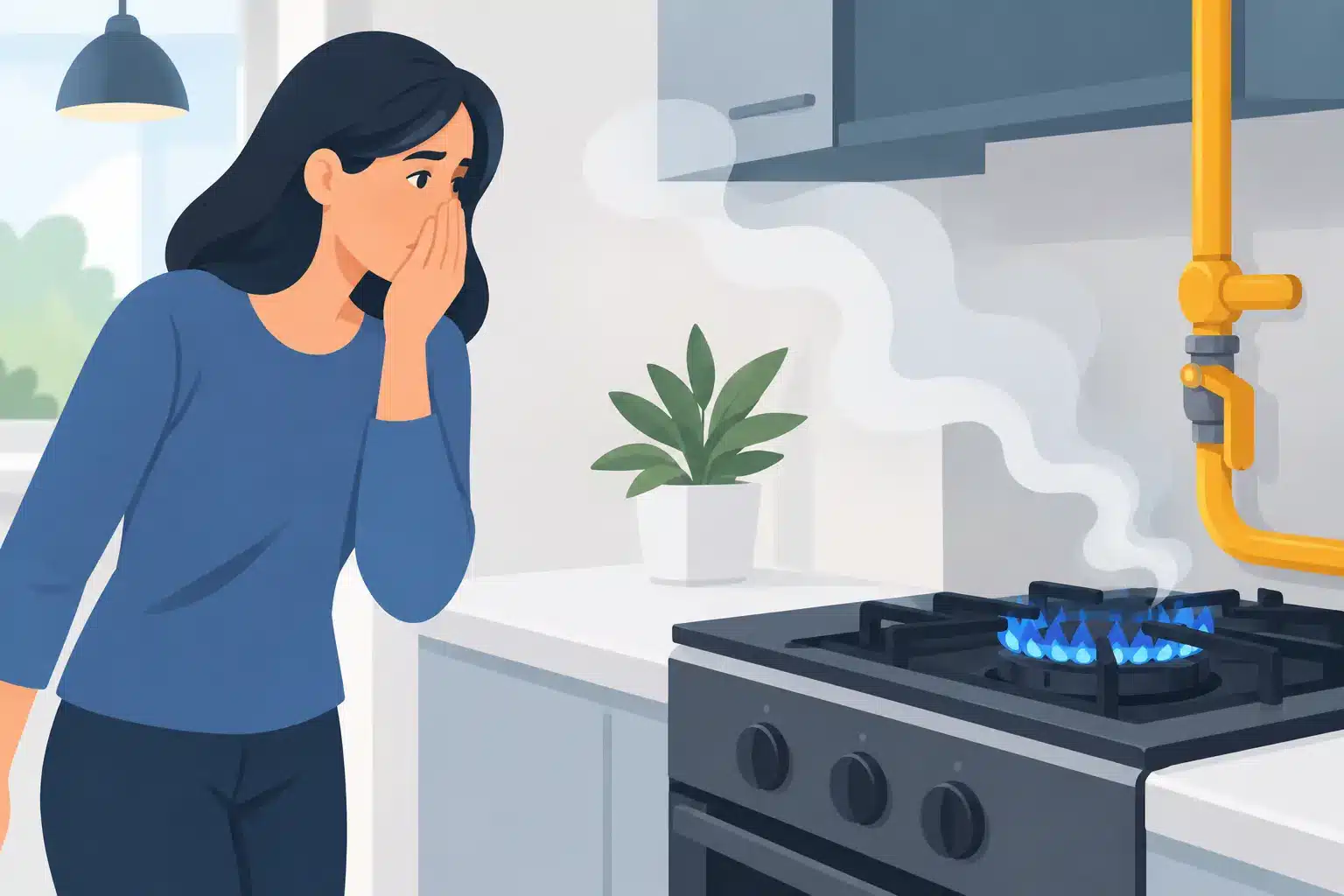
A faint sulfur-like smell near the water heater, stove, or furnace is not something to wait on. Gas leak symptoms can begin quietly, but a damaged gas line, failed appliance connection, or leaking valve can become a serious fire, explosion, or health hazard. If you suspect a leak, treat it as urgent and get a licensed gas professional involved.
Gas Leak Symptoms to Take Seriously
Natural gas has no smell on its own. A strong odorant is added so people can detect a leak, often described as rotten eggs, sulfur, or skunk-like. That smell is one of the clearest warnings, particularly when it is strongest around a gas appliance, meter, piping, or outdoor gas connection.
However, smell is not the only sign. A leak may be outside, behind a wall, under a floor, or in a poorly ventilated service area. The odor can also be less obvious when the leak is small, air movement is high, or a person has become accustomed to it.
A rotten egg or sulfur smell
This is the most recognizable warning sign. A brief odor when lighting a gas burner can occur, but persistent or recurring gas smell is not normal. Do not assume it will clear on its own or that the appliance simply needs time to warm up.
If the odor is strong, leave the building immediately. Do not look for the source, relight a pilot light, or try to repair a connection yourself.
Hissing or whistling near gas equipment
A noticeable hissing, roaring, or whistling sound may indicate gas escaping under pressure. Check neither the appliance nor the gas line closely. Move away from the area and arrange emergency help from a safe location.
Dead or discolored vegetation near an outdoor gas line
A buried gas leak can reduce the oxygen available to plant roots. One patch of dead grass or unusual vegetation does not automatically mean there is a gas leak, but it deserves attention when it appears near a gas meter, underground gas piping, or an outdoor appliance connection.
Unexpected changes to gas bills
A higher gas bill can result from colder weather, increased appliance use, or a water heater that is working harder than it should. But if usage has not changed and the bill rises sharply, a hidden leak or appliance fault should be investigated. A professional inspection can identify whether gas is escaping or equipment is operating inefficiently.
Appliance performance problems
Yellow or orange flames on a gas cooktop, soot around an appliance, frequent pilot light issues, or a furnace that cycles irregularly can point to combustion or gas-supply problems. These issues do not always mean there is a gas leak, but they are not a do-it-yourself diagnosis. They require a qualified technician who can test the appliance and gas system safely.
Physical Symptoms Need Immediate Caution
Some gas leak symptoms affect how people feel, especially in enclosed areas. Headache, dizziness, nausea, unusual tiredness, confusion, or shortness of breath can occur for several reasons, including poor ventilation and carbon monoxide exposure.
Natural gas and carbon monoxide are not the same thing. Natural gas is odorized so leaks can often be detected by smell. Carbon monoxide is colorless and odorless, and it can be produced when a gas appliance is not burning fuel correctly or is not venting properly. A home can have a dangerous carbon monoxide problem without any gas odor at all.
If anyone feels unwell near a gas appliance, get everyone into fresh air immediately and seek emergency medical assistance as needed. Do not re-enter the property until emergency responders, the gas utility, or a licensed professional says it is safe. Carbon monoxide alarms are an essential safety measure, but they do not replace proper appliance servicing and gas-line inspections.
What to Do if You Suspect a Gas Leak
The right response depends on the strength of the smell, the location, and whether there are signs of immediate danger. When in doubt, act as though the situation is serious.
If you smell gas indoors, hear gas escaping, or suspect a major leak, leave the building with other occupants and pets. Avoid anything that could create a spark. Do not smoke, use matches or lighters, operate electrical switches, start a vehicle nearby, or use a phone while inside or close to the suspected leak.
Once you are well away from the property, contact emergency services or your gas utility’s emergency line. Follow their instructions. After the immediate hazard has been addressed, arrange for a licensed and insured gas fitter to find the cause and complete a compliant repair.
For a mild or intermittent smell with no immediate signs of danger, avoid using the affected appliance and book a qualified inspection promptly. Waiting for the smell to become stronger is not a sensible test. Small leaks can worsen, and an appliance fault can create risks that are not visible from the outside.
Why Gas Leaks Need Professional Diagnosis
Gas systems involve pressurized fuel, shutoff valves, appliance regulators, fittings, flexible connections, ventilation, and combustion requirements. A leak may be at a visible connection, but it can also be concealed in pipework, within an appliance, or at a joint that only leaks under certain conditions.
A licensed gas professional uses appropriate testing methods to locate the fault, check gas pressure, assess appliance operation, and confirm that repairs are safe. The goal is not to mask an odor or tighten a fitting temporarily. It is to identify why the leak occurred and repair the system properly to reduce the chance of a repeat failure.
This matters for landlords, property managers, and business owners as much as homeowners. A suspected gas issue in a rental, restaurant, office, strata building, or commercial property can affect multiple people and disrupt operations. Prompt attendance, clear findings, and properly documented work help protect occupants and limit downtime.
Common Causes of Gas Leaks
Wear and movement can affect connections over time, particularly around water heaters, furnaces, cooktops, and outdoor equipment. Aging flexible hoses, corroded pipework, loose fittings, damaged valves, and poorly completed previous work are common causes.
Renovation and landscaping work can also damage gas piping. Drilling into walls, excavating yards, moving appliances, or altering cabinetry around a cooktop can place stress on existing connections. If gas work has been disturbed, it should be inspected before the system is returned to normal use.
Not every gas smell comes from a failed gas line. A burner that is not lighting correctly, a pilot issue, or incomplete combustion may create an odor and still need professional attention. The practical point is the same: gas problems should be assessed by someone qualified to test the full system, not guessed at from the surface symptoms.
Preventing Future Gas Problems
Regular servicing helps identify deteriorating connections and appliance faults before they turn into an emergency. This is especially worthwhile for older properties, rental homes, commercial kitchens, and buildings with multiple gas appliances.
Keep gas appliances clear of stored items, make sure vents are not blocked, and do not ignore soot, unusual flames, recurring pilot outages, or unexplained gas odors. If an appliance has been moved, replaced, or affected by construction work, have its connection and operation checked by a licensed gas fitter.
A gas concern can be unsettling, but you do not need to diagnose it alone. Move to a safe place first, call for emergency help when the risk is immediate, and have a qualified professional carry out the repair so the problem is handled properly.







Leave A Comment